
PDF Attached
USDA
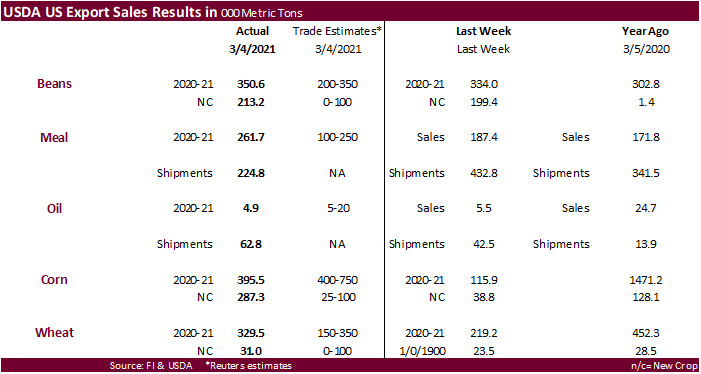
Export Sales were decent. Corn commitments topped 90% of USDA’s export projection and soybeans are nearly at 99%.
Conab
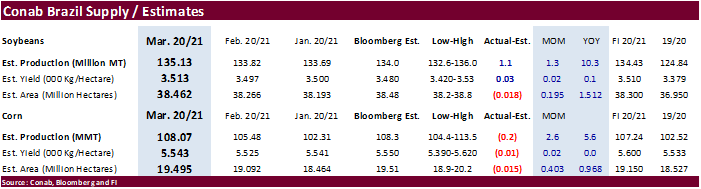
revised higher the Brazil soybean yield and upward revised corn and soybean harvested areas, bearish for soybeans, in our opinion. Conab’s 135.1 million ton Brazil soybean production came in 1.1 million tons above trade expectations and was up 1.3 million
tons from the previous month. The soybean production is above the working 133 million tons used by most of the trade. Conab took Brazil’s corn production up 2.6 million tons from the previous month to 108.07 million tons, near trade expectations. Both the
corn harvested areas were lifted higher form last month, with corn up 403,000 hectares and soybeans up 195,000.

World
Weather Inc.
- Argentina
rainfall will be greatest next week from Tuesday through Thursday when most of the nation will get rain
o
Relief from persistent dryness and crop stress will occur at that time
o
Rain totals of 0.50 to 2.00 inches will result and some of the model data today suggests greater rainfall in Cordoba and Santa Fe
o
Confidence in the increase in rainfall is high
o
Additional opportunities for rain will occur later this month as the upper air wind flow pattern remains support of additional precipitation
- Crop
stress in parts of Argentina will reach a peak over the next several days as top and subsoil moisture are rated short to very short with very warm temperatures and no rain until next week
o
Light rain overnight in western Buenos Aires and eastern La Pampa offered some relief, but much more rain is needed
o
Chaco is still suffering from serious dryness as are some grain, oilseed and cotton areas in Formosa
o
Dryness relief for all of Argentina will occur next week, but until then stress will continue high enough to reduce some potential yield
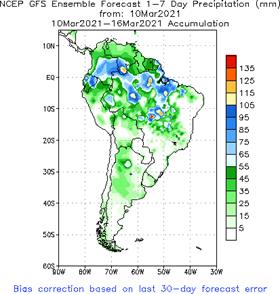
- Little
change was noted in Brazil’s weather overnight
o
The nation will continue to experience net drying in the south over the coming week while periodic showers and thunderstorms maintain a challenging environment for soybean harvesting and Safrinha planting farther to the north
o
Less intensive and less significant rain, though, will help progress increase
- Brazil
weather was drier biased again Wednesday helping to improve topsoil conditions for some better harvest and planting progress, but the risk of more showers and thunderstorms periodically will continue
o
The excesses of rain noted in the past couple of weeks should be a thing of the past, though
- That
does not mean the frequency of rain will not still be a potential problem - U.S.
weather is still looking wet for the central states this weekend into next week
o
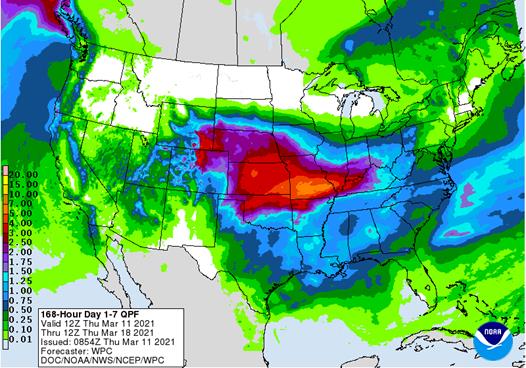
Stormy weather in the central two-thirds of the Great Plains Friday through Monday will generate moisture totals of 0.20 to 0.80 inch and local amounts to 1.50 inches in Texas , 0.50 to 2.50 inches in Oklahoma with some local
totals to 3.00 inches “possible” and 0.75 to 3.00 inches and locally more in Kansas, northeastern Colorado and Nebraska
o
Snowfall will range from 12 to 34 inches in southeastern Wyoming, far northeastern Colorado, extreme western Nebraska and in the southwest corner of South Dakota (this occurs Saturday into Monday)
o
Snowfall in other areas of Nebraska and southern South Dakota will range from 3 to 10 inches with north-central Nebraska getting the greater amounts
- U.S.
Livestock will be threatened in Wyoming, southwestern South Dakota, far western Nebraska and far northeastern Colorado due to very heavy snow during the calving season - Travel
in the heavy snowfall areas of the U.S. will be shut down for a little while
o
This might include Denver, Cheyenne, Wyoming and Rapid City, South Dakota areas
- Severe
thunderstorms will impact the southern U.S. Plains late this week and into the weekend - Some
of the rain from the central Plains will move to the Midwest, Delta and southeastern states late this weekend through much of next week, but it will be less intensive
o
Moisture totals of 2.00 to 4.00 inches and local amounts to 6 inches will occur in southern Missouri and areas east into Kentucky
o
Moisture totals elsewhere in the lower Midwest, Delta and southeastern states will range from 0.50 to 1.50 inches with locally more in the southeast
- Missouri,
southern Illinois, eastern Kansas and Kentucky may experience the greatest risk of flooding this weekend into early next week - U.S.
Plains and Midwest will experience drier weather for a while following the coming week of stormy conditions
o
The next larger storm system may hold off until March 23-26
- Freezes
returning to the central and southern Plains late this weekend and next week will not cause any permanent damage to wheat that is greening
- Drought
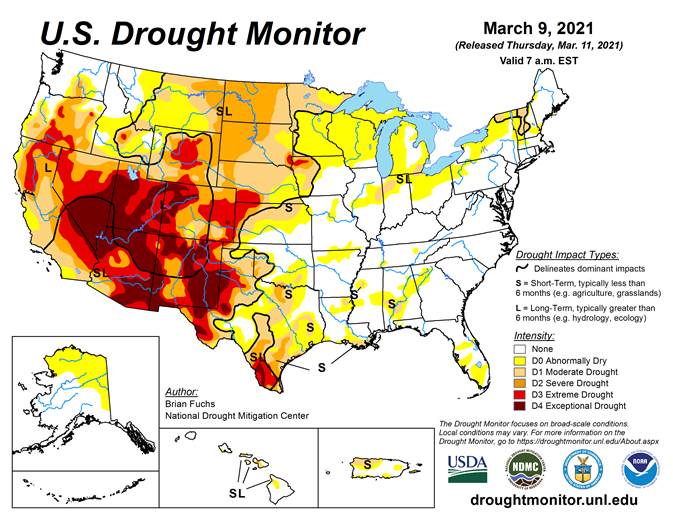
in the northwestern U.S. Plains and Canada’s Prairies will not change over the coming week to ten days
o
The pattern of weather in the central and eastern United States, however, does suggest improved weather will come to these drought stricken areas later this spring as the jet stream shifts northward in April and May
- U.S.
southeastern states will experience net drying and warmer temperatures that will support more aggressive corn planting and other farming activities through the weekend
o
Rain will evolve next week
- U.S.
lower Delta will experience favorable rice and corn planting conditions for a little while in the coming week, but showers this weekend into next week will briefly interrupt some fieldwork - U.S.
northern Delta crop areas will stay quite wet over the coming week to ten days and drying will be needed before fieldwork can begin this spring - U.S.
South Texas and the Texas Coastal Bend is still too dry with little rain potential for a while
o
Unirrigated crops in the region may not get planted as aggressively as usual and will need moisture for seed germination and plant emergence
o
Planting in irrigated areas will increase while the weather is dry and soil temperatures are rising
- U.S.
west Texas precipitation will be welcome Friday into Saturday, but it is not likely to be great enough to seriously change soil conditions and long term planting prospects are not very good without greater precipitation
o
Planting is still several weeks away leaving time for improvement
o
The high Plains region will get less than 0.50 inch
o
The Low Plains will receive 0.25 to 0.80 inch with local totals over 1.00 inch
o
The Rolling Plains will receive 0.50 to 1.50 inches
- U.S.
Midwest field moisture will remain adequate to abundant over the next ten days to two weeks - Canada’s
eastern Prairies received some significant snow Tuesday, but were drying out again Wednesday with little precipitation of significance expected again for a while
o
Bitter cold conditions returned to the Prairies this morning, but another bout of warming is forthcoming
o
The moisture was good for the areas impacted, but much more precipitation is needed before drought is significantly eased
o
Much of Saskatchewan is still quite dry along with southern Alberta
o
Not much follow up precipitation is expected for a while
- Southeast
Canada will experience near to below average precipitation and near to above average temperatures during the coming week to ten days - North
Africa rainfall Wednesday was light and erratic
o
This week’s precipitation has been welcome, but more will be needed to ensure the best yields later this spring
o
Drier weather is expected for a while
- Ivory
Coast, Ghana, Benin and southern Nigeria will receive waves of rain in the next ten days
o
New rain totals will vary from 0.50 to 3.00 inches and locally more will be supportive of coffee and cocoa flowering and help increase soil moisture for future rice, sugarcane and cotton production
- East-central
Africa rainfall will continue greatest in Tanzania this week and probably next week, as well
o
A more erratic and light precipitation pattern is expected elsewhere with net drying in Ethiopia, northern Uganda and in a few southwestern Kenya locations
- South
Africa will experience an erratic rainfall pattern through the next week with temperatures mostly a little warmer than usual
o
The drying trend will encourage early season crop maturation, but subsoil moisture and irrigation will support late season crops
o
Summer crop conditions will remain favorably rated, although there will be a growing need for showers by mid-March
- Some
increase in precipitation is expected in the following week - India
was mostly dry Wednesday, although rain was noted in the extreme north, far east and far south
o
Rain will be mostly limited to these same areas for a while in the coming week leaving most key crop areas in a net drying mode
- China
weather over the next ten days will continue dry in Yunnan while periodic rain and thunderstorms occur near and south of the Yangtze River
o
Rainfall will be greatest in southeastern Sichuan, Guizhou, Hunan Jiangxi and Zhejiang where 1.00 to 3.00 inches and locally more will result
o
Other showers and thunderstorms will occur in east-central China periodically during the next ten days, but periods of sunshine will also occur and rain totals will be mostly under 1.00 inch
o
Northeastern China and the Yellow River Basin will see alternating periods of light precipitation and sunshine through the next two weeks maintaining a very good outlook for winter crop development when seasonal warming begins
- Spring
planting prospects remain exceptionally good. but seasonal warming is needed in many areas
o
Temperatures will be above normal in most of the nation during the coming week to ten days
- Winter
crops will continue to come out of dormancy in the central and south. Spring planting will advance around periods of rain in the south
- Australia
weather in the coming week is expected to include frequent showers and thunderstorms in northeastern New South Wales and southern Queensland
o
The precipitation will be good for late season crops and for improving topsoil moisture for autumn planting
o
Early maturing cotton might not welcome the precipitation and could become a little too wet
- Mexico
drought conditions are still prevailing, although the impact on winter crops is low due to irrigation
o
Water supply is low in some areas and a notable improvement in rainfall is needed, but not very likely
o
Dryland winter crops are stressed and will yield poorly
o
Freeze damage is common in northern parts of the nation due to a couple of cold surges this winter
o
Rain in the coming week will be mostly confined to the east coast and temperatures will be seasonable with a slight warmer bias in the driest areas
- Central
America precipitation will continue greatest along the Caribbean Coast and in Guatemala while the Pacific Coast receives the lightest and most erratic rainfall, but some precipitation will fall especially in Costa Rica and Panama. - Southeast
Asia rainfall will occur relatively normally over the next two weeks
o
Mainland areas will experience net drying over the coming week with rain possible in the March 19-25 period
- The
resulting rainfall will be sporadic and light with net drying probably continuing in many areas for a while longer
o
Philippines rainfall will increase in the coming week due to a tropical weather disturbance that will help induce some moderate to heavy rain at times
o
Indonesia and Malaysia weather during the next two weeks will bring rain to most crop areas maintaining a very good outlook for crop development
- A
boost in precipitation is expected and will be welcome - Peninsular
Malaysia is still driest and has the greatest need for rain - Indonesia
and Malaysia rainfall will occur frequently over the next two weeks - New
Zealand weather will be drier and a little warmer than usual in this coming week with some increase in precipitation March 19-25
o
The nation’s soil moisture has drifted below average especially in the north
- Southern
Oscillation Index has been falling and was at +4.73 this morning. The index is expected to continue to fall for a little longer, but will soon start to level off or possibly rise slightly.
- Europe
weather will be mixed over the next two weeks with periods of rain, mountain snow and sunshine occurring while temperatures are seasonable
o
The environment will be good in maintaining moisture abundance in much of the continent and seasonal warming will bring more winter crops out of dormancy in parts of the west and south
o
Net drying is expected in Spain and Portugal
- Western
CIS temperatures will be cooler than usual this week while waves of snow and rain prevail
o
The environment will be good for spring crop development, but for now there will not be much greening or crop development for a while longer
o
Too much moisture is also present in the soil in western Russia and flooding may be an issue for a while this spring as a deep layer of snow melts while new precipitation falls
- Bitter
cold in Russia this morning occurred in snow covered areas resulting in no crop damage.
Source:
World Weather inc.
Bloomberg
Ag Calendar
Thursday,
March 11:
- USDA
weekly crop net-export sales for corn, soybeans, wheat, cotton, pork, beef, 8:30am - Port
of Rouen data on French grain exports - China
National People’s Congress in Beijing - New
Zealand Food Prices - Conab’s
data on yield, area and output of corn and soybeans in Brazil - HOLIDAY:
India, Indonesia
Friday,
March 12:
- ICE
Futures Europe weekly commitments of traders report (6:30pm London) - CFTC
commitments of traders weekly report on positions for various U.S. futures and options, 3:30pm - FranceAgriMer
weekly update on crop conditions
USDA
Export Sales were
good all around. Corn commitments topped 90% of USDA’s export projection and soybeans are nearly at 99%.
USDA
export sales for corn of 395,500 tons old crop and 287,300 tons new crop were at the high end of expectations when combined. 2020-21 sales of 395,500 MT included Taiwan, Japan, South Korea and Mexico. New-crop sales included Japan (175,200 MT) and Mexico
(112,100 MT). Sorghum sales were 60,300 tons with China taking the bulk of that amount. USDA export sales for pork were very good at 32,400 MT and included China for 10,700 MT (including decreases of 1,000 MT) and Mexico of 6,900 MT (including decreases
of 500 MT).
USDA
export sales for soybeans were better than expectations when combined. 2020-21 sales of 350.600 tons included China (90,200 MT, including 65,000 MT switched from unknown destinations and decreases of 1,400 MT), Indonesia (81,000 MT, including 55,000 MT switched
from unknown destinations), Mexico (77,900 MT, including decreases of 14,400 MT), and Germany (68,100 MT). New crop sales of 213,200 MT were reported for Taiwan (65,000 MT), China (63,000 MT), Bangladesh (55,000 MT), and Japan (30,200 MT).
USDA
soybean meal export sales came in at 261,600 tons, better than expected. Soybean oil sales were only 4,900 tons. Shipments were fantastic for soybean oil at 62,800 tons while meal shipment stood at 224,800 tons.
All-wheat
export sales were 329,500 tons old-crop and 31,000 tons new-crop. Mexico and Japan dominated old crop sales and for new-crop much of it was for Central America.

US
Initial Jobless Claims Mar 6: 712K (est 725K; prevR 754K; prev 745K)
US
Continuing Claims Feb 27: 4144K (est 4200K; prevR 4337K; prev 4295K)
Corn
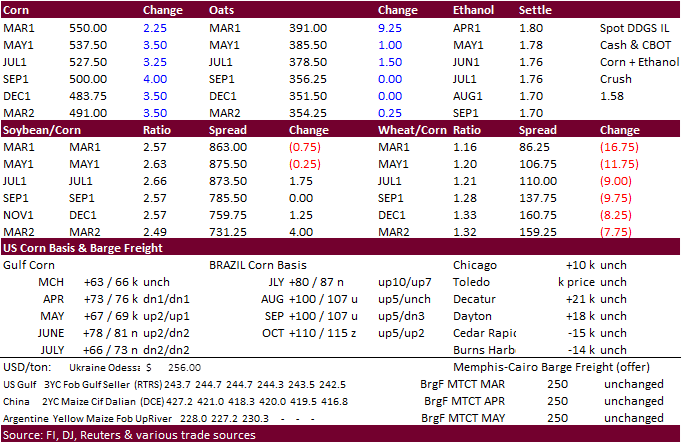
- Corn
futures rose today on strength in soybeans and outside markets. Argentine hot and dry weather and global demand underpinned the corn and soybean markets today.
- USDA
export sales commitments for corn topped 90 percent of USDA’s export projection. Note shipments via USDA inspections report are running about 62 percent of USDA’s 2.600 billion (66MMT) export forecast. As US shipments of soybeans slow and corn ramping up,
we look for USDA to report corn inspections on Monday between 59 and 71 million bushels versus its 4-week average of 61 million.
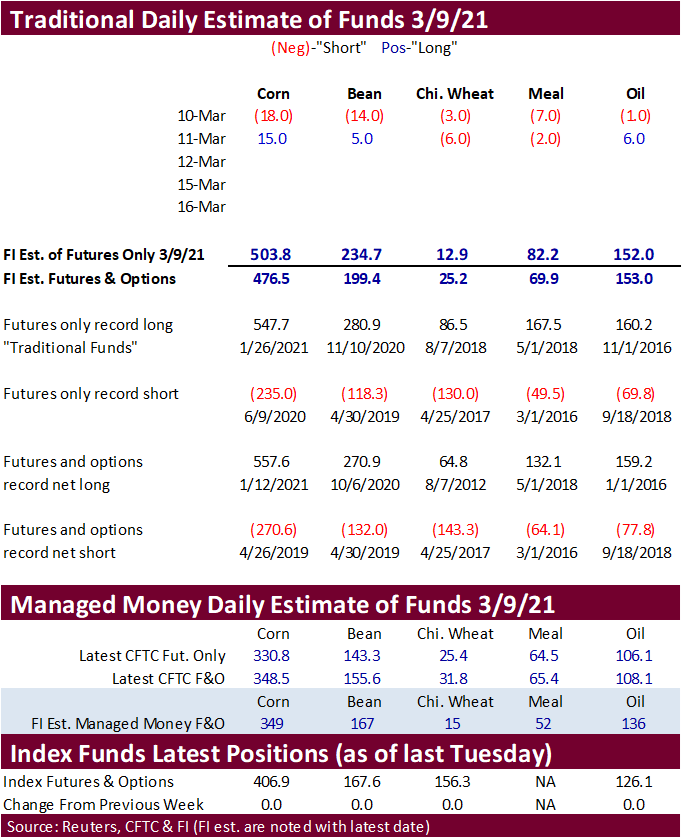
- Funds
were net buyers of 15,000 corn contracts on the session.
Export
developments.
- South Korea’s KOCOPIA bought 60,000
tons of US corn at an estimated $300.00 a ton c&f for arrival in South Korea around June 20.
- South Korea’s KFA bought 64,000 tons
of optional origin corn at an estimated $290.99 a ton c&f for arrival around July 10. - South Korea’s NOFI bought 197,000
tons of optional origin corn in three consignments, at prices cheaper than their late February import tender that cost around $293.90 per ton.
- First consignment was bought at $288.85
a ton c&f for arrival around July 5 - Second consignment was bought at
$288.70 a ton c&f for arrival around July 15 - Third consignment was bought at $287.40
a ton c&f for arrival around July 25. - Turkey seeks 115,000 tons of corn
for animal feed on March 18 for March 25-April 20 shipment.
Updated 3/1/21
May
corn is seen in a $5.20 and $5.75 range.
July
is seen in a $5.00 and $6.00 range.
December
corn is seen in a $3.85-$5.50 range.
- The
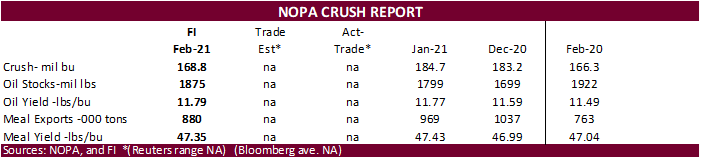
soybean complex was
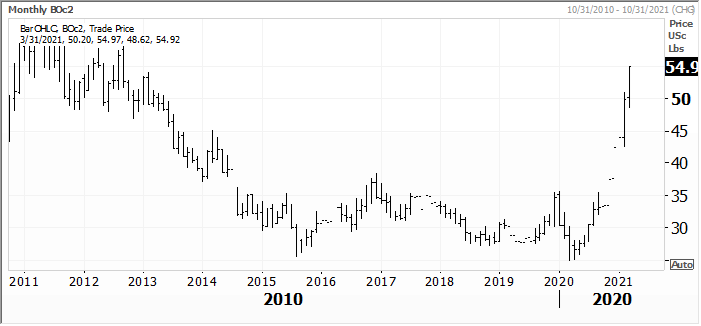
mixed on the session with soybean doing the heavy lifting once again. Contract highs were set in bean oil as the global vegoil markets are still robust.
- Also
lending support to soy are the continuing weather issues in South America.
- BA
Grain Exchange estimated the Argentina soybean crop at 44 million tons and 45 million tons for corn. They were at 46 million tons for both for their previous estimate. Yesterday Rosario grains exchange reported the Argentina soybean crop at 45 million tons.
We are at 46 million tons. For Brazil we are using 133 million tons, around other trade expectations.
- Malaysian
palm oil rallied for the 7th consecutive day, to a 13-year high.
- China
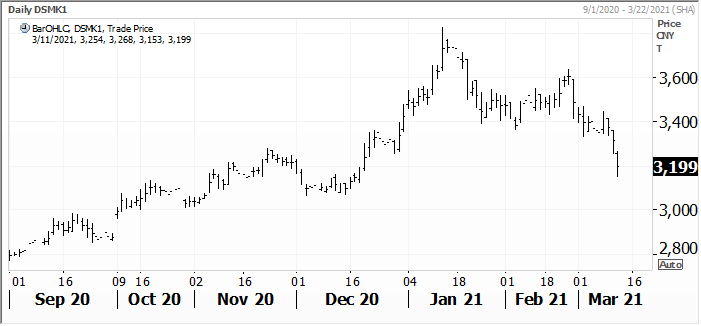
soybean meal futures tanked by 3.5% on ASF outbreaks. This weighed on soymeal in the US all session - Note
86 percent of USDA’s US soybean export projection had been shipped as of early March.
- There
were no major changes to the SA weather forecast. Argentina will continue to see a drier bias into next week impacting yield potential, but rain is expected next Tuesday and Wednesday is expected to bring widespread relief (1-2+ inches). Northern and central
Brazil will remain active for at least the next week. - Yesterday
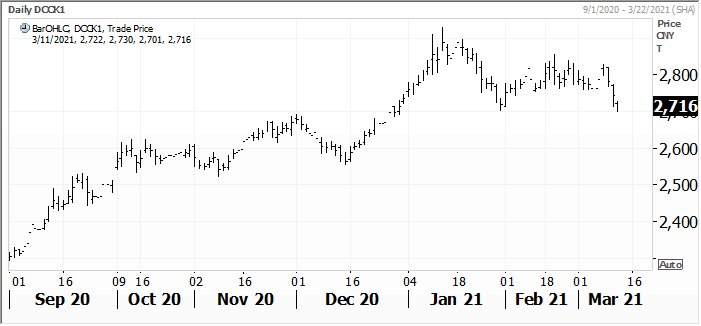
we reported poor crush margins and upcoming arrivals of Brazilian soybean are keeping China importers away from making new purchases. Think its safe to say slowing feed demand from concerns over a new strain of African swine fever could be added to the bearish
undertone. China soybean meal and corn futures prices have been trending lower this week. China’s National Grain and Oil Information Centre (CNGOIC) estimated soybean meal stocks increased 100,000 tons to 870,000 tons last week, highest since December.
- China
cash soybean crush margins on our analysis improved again by a good amount to 175 cents from 146 previous, up from 113 cents late last week and compares to 128 cents year earlier.
- Funds
were net buyers of 5,000 soybean contracts, sellers of 2,000 soybean meal contracts and net buyers of 6,000 bean oil contracts.
- ICE
May canola was up $24.80 to $801.50/ton on EU rapeseed demand out of Asia. Exporters also priced sales in canola which will remain tight.
Export
Developments
- South
Korea’s NOFI group seeks 12,000 tons of soybean meal for March 11-March 29 shipment (US), or up through April 15 if sourced from China.
- The
USDA CCC seeks 2,030 tons of packaged oil on March 16 for shipment Apr 16 – May 15.
Livestock
feed prices in China are falling
over concerns over a new strain of African Swine Fever.
China
May meal
Source:
Reuters and FI
China
May corn
Source:
Reuters and FI
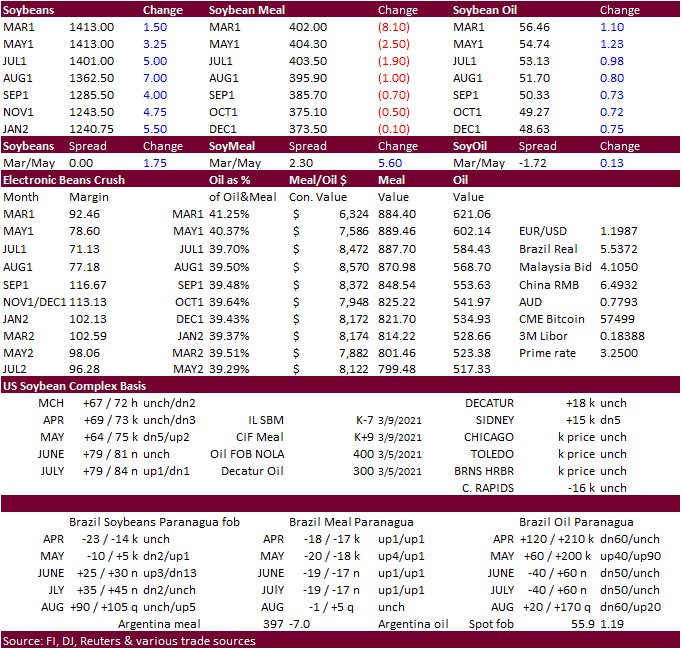
Updated
3/11/21
May soybeans are seen in a $13.75 and $14.75
range. (up 25, dn 25)
May soymeal is seen in a $400
and $450 range. (unch, dn 50)
May soybean oil is seen in
a 52.00 and 56.00 cent range. (up 300 and 200, respectively) – we do not discount volatility
to increase.
Monthly
oil share – rolling second month
Source:
Reuters and FI
-
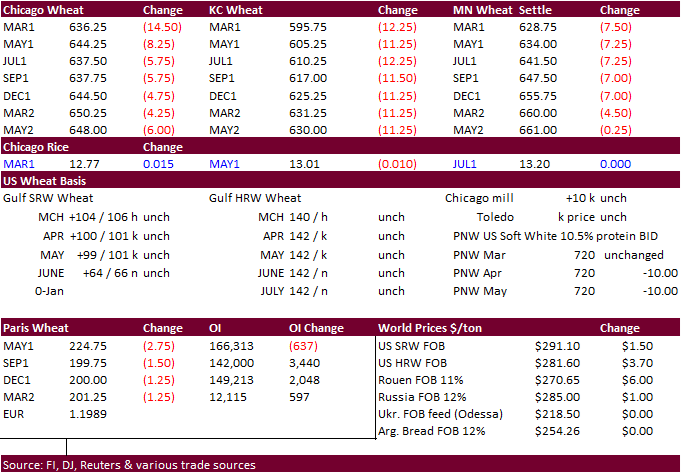
US
wheat futures ended lower on improving weather for the Plains early next week. Rain and snow will hit the drier areas of the winter wheat growing areas according to weather models.
-
Egypt
bought 360,000 tons of Romanian wheat for April 15-25 shipment. GASC followed the tender with the headline stating that its strategic reserves are at 5 months. We would expect them back in the market on any break in price as they are always consuming.
- Funds
were net sellers of 6,000 net soft wheat contracts on the session. - EU
May milling wheat was down 3.00 at 224.50 euros. - Ukrainian
state weather forecaster noted most regions of Ukraine may have optimal soil moisture reserves as of early spring. Spring barley plantings could start between March 17 and 25.
Export
Developments.
60,000
tons of Romanian wheat at $281.49 and $15.91 freight equating to $297.40
60,000
tons of Romanian wheat at $281.49 and $15.91 freight equating to $297.40
60,000
tons of Romanian wheat at $281.49 and $15.91 freight equating to $297.40
- The
Philippines passed on 385,000 tons of animal feed wheat for shipment between June to December due to high prices.
- Jordan
seeks 120,000 tons of animal feed barley, on March 16 for shipment between October 1 and November 15.
- Results
awaited: Algeria seeks around 50,000 tons of feed barley on March 11 for shipment by April 25.
- Pakistan
seeks 300,000 tons of wheat on March 16 for April-August shipment.
Rice/Other
·
Bangladesh recently got approval to import 150,000 tons of rice from India. (3/10)
·
Bangladesh seeks 50,000 tons of rice on March 18.
·
Syria seeks 25,000 tons of white rice on March 29, from China or Egypt.
Updated
3/9/21
May
Chicago wheat is seen in a $6.25‐$6.90 range
May
KC wheat is seen in a $5.75‐$6.75 range
May
MN wheat is seen in a $6.20‐$6.65 range
U.S. EXPORT SALES FOR WEEK ENDING 3/4/2021
|
|
CURRENT MARKETING YEAR |
NEXT MARKETING YEAR |
||||||
|
COMMODITY |
NET SALES |
OUTSTANDING SALES |
WEEKLY EXPORTS |
ACCUMULATED EXPORTS |
NET SALES |
OUTSTANDING SALES |
||
|
CURRENT YEAR |
YEAR |
CURRENT YEAR |
YEAR |
|||||
|
|
THOUSAND METRIC TONS |
|||||||
|
WHEAT |
|
|
|
|
|
|
|
|
|
HRW |
151.9 |
1,376.1 |
1,779.4 |
110.9 |
6,782.8 |
6,993.6 |
6.0 |
258.0 |
|
SRW |
20.1 |
413.9 |
336.8 |
10.9 |
1,340.7 |
1,964.1 |
12.0 |
296.6 |
|
HRS |
67.9 |
1,941.5 |
1,606.9 |
110.4 |
5,218.6 |
5,369.5 |
13.0 |
245.7 |
|
WHITE |
89.1 |
2,138.1 |
1,046.0 |
236.1 |
4,236.0 |
3,707.2 |
0.0 |
80.3 |
|
DURUM |
0.5 |
154.2 |
148.4 |
0.5 |
518.4 |
679.8 |
0.0 |
5.0 |
|
TOTAL |
329.5 |
6,023.8 |
4,917.3 |
468.7 |
18,096.5 |
18,714.2 |
31.0 |
885.6 |
|
BARLEY |
1.1 |
11.5 |
14.9 |
0.2 |
22.0 |
34.3 |
0.0 |
14.5 |
|
CORN |
395.5 |
31,756.3 |
12,881.3 |
1,592.9 |
27,762.7 |
15,231.9 |
287.3 |
1,554.0 |
|
SORGHUM |
60.3 |
2,844.4 |
915.9 |
59.2 |
3,094.1 |
1,083.1 |
53.0 |
756.0 |
|
SOYBEANS |
350.6 |
7,111.4 |
4,167.5 |
705.1 |
53,320.3 |
30,092.0 |
213.2 |
5,076.2 |
|
SOY MEAL |
261.6 |
2,720.2 |
3,252.0 |
224.8 |
5,673.9 |
5,078.9 |
18.3 |
233.4 |
|
SOY OIL |
4.9 |
101.8 |
257.1 |
62.8 |
501.1 |
500.1 |
0.0 |
0.6 |
|
RICE |
|
|
|
|
|
|
|
|
|
L G RGH |
14.4 |
264.6 |
376.7 |
25.3 |
1,007.8 |
879.6 |
0.0 |
0.0 |
|
M S RGH |
0.0 |
9.9 |
50.9 |
0.0 |
19.0 |
17.5 |
0.0 |
0.0 |
|
L G BRN |
0.3 |
12.6 |
13.2 |
0.5 |
24.5 |
35.0 |
0.0 |
0.0 |
|
M&S BR |
0.2 |
70.7 |
69.6 |
0.2 |
81.9 |
38.1 |
0.0 |
0.0 |
|
L G MLD |
6.7 |
76.1 |
60.7 |
4.3 |
401.1 |
635.2 |
0.0 |
0.0 |
|
M S MLD |
7.5 |
224.7 |
194.0 |
17.8 |
347.8 |
385.4 |
0.0 |
0.0 |
|
TOTAL |
29.0 |
658.7 |
765.1 |
48.2 |
1,882.2 |
1,990.8 |
0.0 |
0.0 |
|
COTTON |
|
THOUSAND RUNNING BALES |
||||||
|
UPLAND |
212.0 |
5,308.2 |
7,057.0 |
351.6 |
8,481.5 |
7,470.1 |
92.2 |
1,288.8 |
|
PIMA |
12.4 |
263.2 |
232.8 |
23.7 |
457.8 |
271.3 |
0.0 |
1.1 |
This
summary is based on reports from exporters for the period February 26-March 4, 2021.
Wheat: Net
sales of 329,500 metric tons (MT) for 2020/2021 were up 50 percent from the previous week, but down 4 percent from the prior 4-week average. Increases primarily for Mexico (111,500 MT, including decreases of 1,200 MT), Japan (56,100 MT, including decreases
of 500 MT), Thailand (53,300 MT), Vietnam (44,000 MT, including 11,000 MT switched from unknown destinations), and Ecuador (30,500 MT, including 30,000 MT switched from unknown destinations), were offset by reductions primarily for unknown destinations (51,000
MT). For 2021/2022, net sales of 31,000 MT were for Honduras (17,000 MT) and Colombia (14,000 MT). Exports of 468,700 MT were up 15 percent from the previous week and 16 percent from the prior 4-week average. The destinations were primarily to China (130,600
MT), South Korea (82,600 MT), Japan (71,100 MT), the Philippines (62,700 MT), and Taiwan (61,700 MT).
Optional
Origin Sales: For
2020/2021, the current outstanding balance of 10,000 MT, all Spain.
Corn:
Net sales of 395,500 MT for 2020/2021 were up noticeably from the previous week, but down 48 percent from the prior 4-week average. Increases primarily for Taiwan (135,200 MT, including 56,000 MT switched from Japan and 65,000 MT late), South Korea (127,600
MT, including 68,000 MT switched from unknown destinations and decreases of 6,400 MT), Mexico (108,000 MT), Vietnam (63,700 MT, including 66,000 MT switched from unknown destinations and decreases of 2,300 MT), and Kuwait (41,100 MT, switched from unknown
destinations), were offset by reductions primarily for unknown destinations (180,900 MT). For 2021/2022, net sales of 287,300 MT were reported for Japan (175,200 MT) and Mexico (112,100 MT). Exports of 1,592,900 MT were down 21 percent from the previous
week, but up 4 percent from the prior 4-week average. The destinations were primarily to China (348,400 MT), Japan (276,300 MT), Mexico (202,100 MT), Egypt (140,800 MT), and South Korea (127,900 MT).
Optional
Origin Sales: For
2020/2021, the current outstanding balance of 1,174,400 MT is for South Korea (793,000 MT), unknown destinations (244,000 MT), Taiwan (70,000 MT), China (65,000 MT), and Ukraine (2,400 MT).
Late
Reporting: For 2020/2021,
net sales totaling 131,000 MT were reported late for Japan (66,000 MT) and Taiwan (65,000 MT).
Barley:
For 2020/2021, net sales of 1,100 MT were for Canada (900 MT) and South Korea (200 MT). Exports of 200 MT were primarily to South Korea.
Sorghum:
For 2020/2021, net sales of 60,300 MT were primarily for China (60,200 MT, including decreases of 100 MT). For 2021/2022, total net sales of 53,000 MT were for China. Exports of 59,200 MT were down 18 percent from the previous week and 28 percent from the
prior 4-week average. The destination was China.
Rice:
Net sales of 29,000 MT for 2020/2021 were down 69 percent from the previous week and 61 percent from the prior 4-week average. Increases were primarily for Mexico (7,200 MT, including decreases of 300 MT), Canada (5,700 MT), Guatemala (5,000 MT), Japan (4,400
MT), and El Salvador (4,400 MT). Exports of 48,200 MT were down 67 percent from the previous week and 37 percent from the prior 4-week average. The destinations were primarily to Venezuela (24,500 MT), Japan (13,500 MT), Canada (3,100 MT), Mexico (1,700
MT), and Jordan (1,400 MT).
Soybeans:
Net sales of 350,600 MT for 2020/2021 were up 32 percent from the previous week, but down 5 percent from the prior 4-week average. Increases primarily for China (90,200 MT, including 65,000 MT switched from unknown destinations and decreases of 1,400 MT ),
Indonesia (81,000 MT, including 55,000 MT switched from unknown destinations), Mexico (77,900 MT, including decreases of 14,400 MT), Germany (68,100 MT), and Egypt (64,700 MT, including 55,000 MT switched from unknown destinations), were offset by reductions
primarily for unknown destinations (125,300 MT). For 2021/2022, net sales of 213,200 MT were reported for Taiwan (65,000 MT), China (63,000 MT), Bangladesh (55,000 MT), and Japan (30,200 MT). Exports of 705,100 MT were down 36 percent from the previous week
and 45 percent from the prior 4-week average. The destinations were primarily to China (224,800 MT), Egypt (149,700 MT), Indonesia (84,800 MT), Germany (68,100 MT), and Mexico (61,100 MT).
Exports
for Own Account:
The current exports for own account outstanding balance is 5,800 MT, all Canada.
Export
Adjustment: Accumulated
exports of soybeans to the Netherlands were adjusted down 68,132 MT for week ending February 25th. The correct destination for this shipment was Germany.
Soybean
Cake and Meal: Net
sales of 261,600 MT for 2020/2021 were up 40 percent from the previous week and 12 percent from the prior 4-week average. Increases primarily for Mexico (89,400 MT, including decreases of 15,400 MT), the Philippines (75,200 MT, including decreases of 100
MT), Ecuador (29,500 MT, including decreases of 500 MT), El Salvador (18,500 MT, including 5,000 MT switched from Guatemala), and the Dominican Republic (15,000 MT), were offset by reductions for Guatemala (3,400 MT) and Belgium (1,800 MT). For 2021/2022,
net sales of 18,300 MT were for Guatemala (12,000 MT) and El Salvador (6,300 MT). Exports of 224,800 MT were down 48 percent from the previous week and 25 percent from the prior 4-week average. The destinations were primarily to the Philippines (47,700 MT),
Mexico (29,800 MT), Peru (28,100 MT), Ecuador (27,000 MT), and Colombia (23,200 MT).
Soybean
Oil: Net sales of
4,900 MT for 2020/2021 were down 10 percent from the previous week, but up 43 percent from the prior 4-week average. Increases primarily for South Korea (25,000 MT, switched from unknown destinations), Hong Kong (5,600 MT, including 5,500 MT switched from
unknown destinations), Guatemala (3,500 MT), El Salvador (1,000 MT), and Mexico (500 MT), were offset by reductions primarily for unknown destinations (30,500 MT). Exports of 62,800 MT–a marketing-year high–were up 48 percent from the previous week and
up noticeably from the prior 4-week average. The destinations were primarily to South Korea (40,000 MT), Guatemala (9,500 MT), Hong Kong (5,600 MT), El Salvador (2,800 MT), and Costa Rica (2,000 MT).
Cotton:
Net sales of 212,000 RB for 2020/2021 were up 25 percent from the previous week and 5 percent from the prior 4-week average. Increases were primarily for China (58,000 RB, including 20,200 RB switched from Vietnam), Vietnam (30,700 RB, including 400 RB switched
from Japan, 400 RB switched from South Korea, and decreases of 4,200 RB), Turkey (30,300 RB), Pakistan (23,600 RB), and Bangladesh (21,300 RB). For 2021/2022, net sales of 92,200 RB were primarily for Mexico (56,300 RB), Turkey (23,300 RB), and China (10,100
RB). Exports of 351,600 RB were down 7 percent from the previous week and 1 percent from the prior 4-week average. Exports were primarily to China (94,000 RB), Vietnam (70,200 RB), Pakistan (60,200 RB), Turkey (36,700 RB), and Mexico (22,600 RB). Net sales
of Pima totaling 12,400 RB were up 58 percent from the previous week and 13 percent from the prior 4-week average. Increases primarily for China (4,400 RB), India (3,400 RB), Pakistan (2,300 RB, including 800 RB switched from the United Arab Emirates), Germany
(900 RB), and Thailand (700 RB, including 100 RB switched from Japan), were offset by reductions primarily for the United Arab Emirates (800 MT). Exports of 23,700 RB were up noticeably from the previous week and from the prior 4-week average. The destinations
were primarily to India (7,400 RB), China (4,100 RB), Pakistan (3,600 RB), Peru (3,000 RB), and Vietnam (2,100 RB).
Exports
for Own Account:
For 2020/2021, new exports for own account totaling 2,800 RB were to Vietnam (2,600 RB) and Bangladesh (200 RB). Exports for own account totaling 8,400 RB primarily to Vietnam (7,200 RB) were applied to new or outstanding sales. The current exports for own
account outstanding balance of 35,000 RB is for China (28,200 RB), Vietnam (6,200 RB), and Bangladesh (600 RB).
Hides
and Skins:
Net sales of 518,600 pieces for 2021 were up 44 percent from the previous week and 60 percent from the prior 4-week average. Increases primarily for China (390,500 whole cattle hides, including decreases of 35,600 pieces), South Korea (31,300 whole cattle
hides, including decreases of 2,100 pieces), Thailand (29,000 whole cattle hides, including decreases of 700 pieces), Mexico (26,600 whole cattle hides, including decreases of 1,000 pieces), and Taiwan (17,900 whole cattle hides), were offset by reductions
for Brazil (1,400 pieces). Total net sales of 1,000 calf skins were for Italy, including decreases of 100 pieces. In addition, total
net sales reductions of 300 kip skins were for Belgium.
Exports of 389,800 pieces for 2021 were down 1 percent from the previous week, but up 10 percent from the prior 4-week average. Whole cattle hides exports were primarily to China (286,400 pieces), South Korea (40,700 pieces), Mexico (27,300 pieces), Thailand
(17,700 pieces), and Brazil (5,900 pieces). Exports of 3,900 calf skins were to Italy. Additionally, exports of 2,600 kip skins were to Belgium.
Net
sales of 144,400 wet blues for 2021 were up 91 percent from the previous week and 44 percent from the prior 4-week average. Increases primarily for Vietnam (68,400 unsplit, including decreases of 200 unsplit), China (26,200 unsplit, including decreases of
400 unsplit), Italy (19,700 unsplit, including decreases of 200 unsplit), Thailand (16,800 unsplit), and Mexico (7,800 grain splits and 1,100 unsplit, including decreases of 100 grain splits). Exports of 108,800 wet blues for 2021 were up 16 percent from
the previous week and 1 percent from the prior 4-week average. The destinations were primarily to Vietnam (33,200 unsplit), Italy (24,100 unsplit and 7,200 grain splits), China (20,700 unsplit and 2,500 grain splits), Brazil (6,500 unsplit), and Thailand
(4,900 unsplit). Net sales of 1,486,600 splits were reported for Vietnam (1,205,100 pounds, including decreases of 2,100 pounds), Italy (195,700 pounds), and Taiwan (85,800 pounds, including decreases of 700 pounds). Exports of 482,500 pounds were to Vietnam
(440,000 pounds) and Taiwan (42,500 pounds).
Beef:
Net
sales of 20,900 MT reported for 2021 were down 8 percent from the previous week, but up 17 percent from the prior 4-week average. Increases were primarily for South Korea (6,600 MT, including decreases of 400 MT), Japan (5,900 MT, including decreases of 800
MT), Mexico (2,100 MT), China (1,800 MT, including decreases of 100 MT), and Taiwan (1,800 MT, including decreases of 100 MT). Exports of 17,800 MT were down 9 percent from the previous week, but up 5 percent from the prior 4-week average. The destinations
were primarily to South Korea (5,500 MT), Japan (4,700 MT), China (2,700 MT), Mexico (1,200 MT), and Taiwan (900 MT).
Pork:
Net
sales of 32,400 MT reported for 2021 were down 46 percent from the previous week and 17 percent from the prior 4-week average. Increases primarily for China (10,700 MT, including decreases of 1,000 MT), Mexico (6,900 MT, including decreases of 500 MT), Japan
(3,100 MT, including decreases of 200 MT), South Korea (2,900 MT, including decreases of 700 MT), and Canada (2,800 MT, including decreases of 400 MT), were offset by reductions primarily for Guatemala (400 MT). Exports of 39,300 MT were down 2 percent from
the previous week, but up 3 percent from the prior 4-week average. The destinations were primarily to China (11,900 MT), Mexico (10,000 MT), Japan (4,800 MT), South Korea (3,300 MT), and the Philippines (2,000 MT).
Terry Reilly
Senior Commodity Analyst – Grain and Oilseeds
Futures International
One Lincoln Center
18 W 140 Butterfield Rd.
Oakbrook Terrace, Il. 60181
W: 312.604.1366
ICE IM:
treilly1
Skype: fi.treilly

Trading of futures, options, swaps and other derivatives is risky and is not suitable for all persons. All of these investment products are leveraged, and you can lose more than your initial deposit. Each investment product is offered
only to and from jurisdictions where solicitation and sale are lawful, and in accordance with applicable laws and regulations in such jurisdiction. The information provided here should not be relied upon as a substitute for independent research before making
your investment decisions. Futures International, LLC is merely providing this information for your general information and the information does not take into account any particular individual’s investment objectives, financial situation, or needs. All investors
should obtain advice based on their unique situation before making any investment decision. The contents of this communication and any attachments are for informational purposes only and under no circumstances should they be construed as an offer to buy or
sell, or a solicitation to buy or sell any future, option, swap or other derivative. The sources for the information and any opinions in this communication are believed to be reliable, but Futures International, LLC does not warrant or guarantee the accuracy
of such information or opinions. Futures International, LLC and its principals and employees may take positions different from any positions described in this communication. Past results are not necessarily indicative of future results.
 Evecom-FI031121.pdf